Argo Panoptes, a colossal figure in Greek mythology, was entrusted with the sacred task of guarding Hera’s revered cow, a symbol of marriage and family.
His name, “Panoptes,” means “all-seeing,” a fitting title for a giant endowed with a hundred eyes, each of which watched over the vast expanse of his realm. However, his watchful reign was disrupted when Hermes, the cunning messenger of the gods, stealthily stole the sacred cow. In a swift act of vengeance, Hermes struck Argo with a stone, transforming him into a celestial constellation, destined to shine forever in the night sky.
The demise of Argo Panoptes was greeted with jubilation by the local peasants, who celebrated their newfound freedom from his relentless gaze, which now allowed them to thrive in peace. This myth serves as a powerful allegory, illustrating the delicate balance of power: even the most powerful guardian can succumb to a cunning and unpredictable enemy, as Hermes so skillfully demonstrates.
The legacy of Argo Panoptes endures, inspiring countless works of art and literature, including Aeschylus’s poignant tragedy Prometheus Bound and Ovid’s enchanting Metamorphoses.
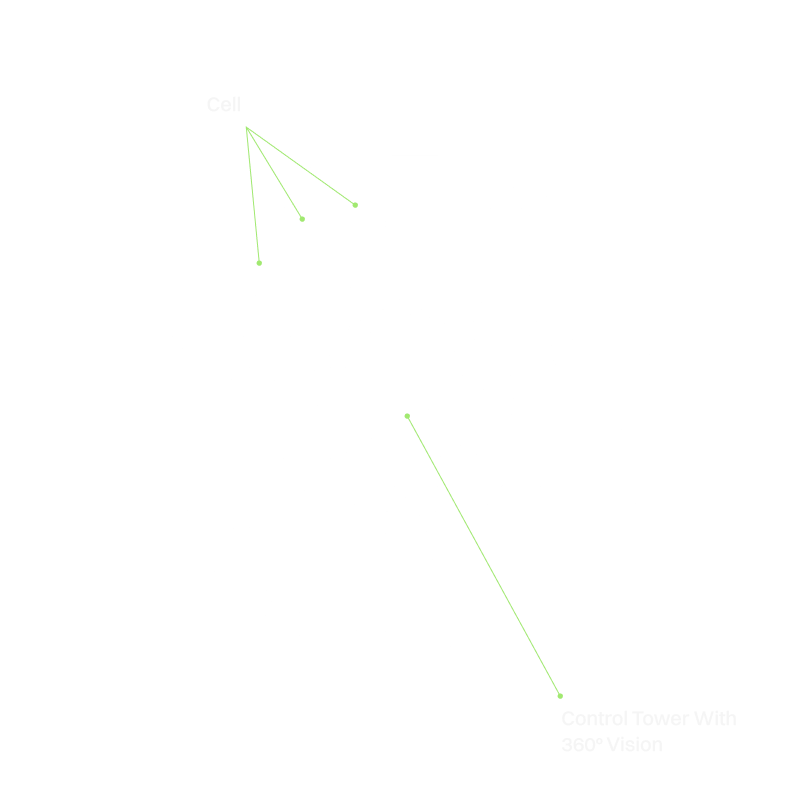
The Panopticon is a model for a prison design conceived by the British philosopher Jeremy Bentham in the 18th century. The idea behind the Panopticon is to create a prison in which inmates are constantly monitored, without knowing when they are being watched.
The Panopticon features a circular structure with a central tower housing the guards, surrounded by a series of cells, each with a window facing the tower. In this way, inmates cannot know when they are being watched and are therefore constantly “self-monitored.”
The Panopticon prison served as a model for the design of other institutions, such as schools, psychiatric hospitals, and factories. Its concept of constant surveillance and self-control has also inspired certain social and political theories, such as Michel Foucault’s “surveillance society.”
However, the Panopticon has also been criticized for its implications for privacy and individual freedom, which could be compromised by constant and omnipresent surveillance.
Inspired by our historical roots, our goal was to bring the Greek myth back to life by contextualizing it within the era in which we live—the “digital age.” The need to protect data, which has become the fourth most important factor in production, prompted us to revive the myth, this time entrusting it with the mission of protecting citizens.
Thanks to our technologies, we help companies set up ethical systems that respect the fundamental principles of human dignity, preventing unlawful processing that could compromise a person’s integrity.
It is of fundamental importance to ensure technological governance in Europe, balancing it with respect for fundamental human principles through an ethical and sustainable approach.
Opticon, which sees everything, combats the dark sides that technology can entail.